Built by Us, For Us: How Asian American Communities Are Physically Remaking the Cities They Call Home
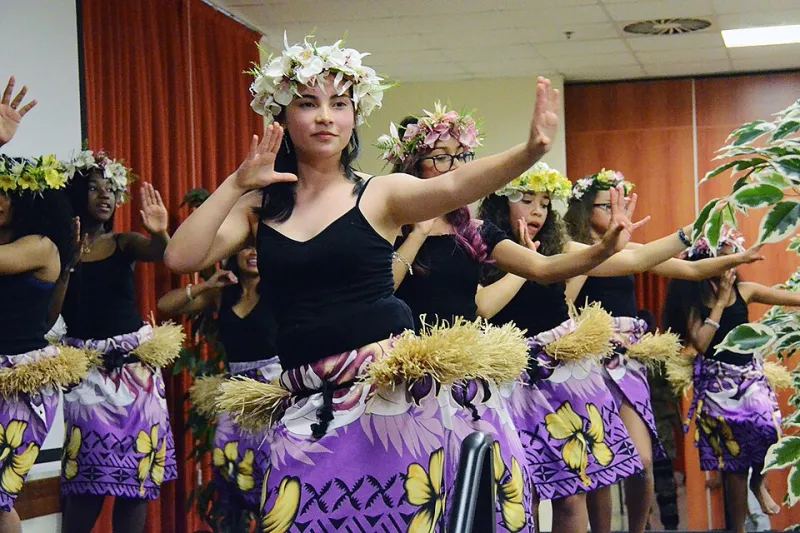
Photo: U.S. Army USAG-V by Laura Kreider, Public domain, via Wikimedia Commons
There's a corner in Koreatown, Los Angeles, where on any given Saturday morning you can smell ddukbokki before you see the stall selling it. A few feet away, a ceramicist from Busan sells hand-thrown bowls next to a third-generation Vietnamese American woman hawking her grandmother's bánh mì recipe out of a retrofitted food cart. It's loud, it's layered, and it didn't happen by accident.
Across the country, Korean and Asian diaspora communities are doing something that goes way beyond just opening businesses or hosting festivals. They're intentionally designing and reclaiming physical space — the kind of space that says we live here, we belong here, and we're not going anywhere.
From Pop-Up to Permanent
The pop-up market has become one of the most powerful tools in the Asian American community-building toolkit. What started as a scrappy workaround — a way to sell food and goods without the overhead of a brick-and-mortar lease — has evolved into a full-blown cultural institution in cities like New York, Houston, Chicago, and the Bay Area.
Organizations like Saturday Markets in Flushing and the Seoul of Chicago collective aren't just selling stuff. They're curating an experience. They're deciding who gets a table, what the layout looks like, which vendors get to tell their stories on signage, and how the whole thing feels to someone walking in for the first time. That's design. That's placemaking.
Jenny Cho, one of the organizers behind a recurring pop-up series in Atlanta's Doraville neighborhood — sometimes called "K-Town South" — puts it plainly: "We're not just filling a parking lot on weekends. We're training people to see this neighborhood as theirs. Once you've eaten here, laughed here, brought your kids here — you defend it."
The Architecture of Identity
Beyond markets, a new generation of architects and urban planners with Asian American roots is pushing into the built environment itself, asking harder questions about what community-centered design actually looks like.
In Seattle, firms with Korean and Filipino American principals have been involved in mixed-use developments that deliberately incorporate cultural programming space into their ground floors — not as an afterthought, not as a token gesture, but as a load-bearing element of the building's identity. Community meeting rooms. Gallery walls. Shared commercial kitchens that double as incubator spaces for immigrant food entrepreneurs.
This isn't just aesthetics. It's a direct response to decades of displacement — the Chinatowns bulldozed for freeways, the Koreatowns gentrified into unrecognizable shells of themselves, the Little Tokyos slowly hollowed out by rising rents. The people designing these new spaces remember, or inherited the memory of, what it felt like to watch community disappear.
"We talk a lot about 'culturally responsive design' in planning school," says one Bay Area-based urban designer who asked to be identified only by her first name, Mina. "But what that really means, in practice, is asking: who has historically been excluded from deciding what this place looks like? And then making sure those people are in the room — not as consultants, but as decision-makers."
Reclaiming Visibility
There's something deeply political about visibility. When a Korean American cultural center opens in a neighborhood that's been predominantly white for decades, it's not just a building opening. It's a statement. When a pan-Asian food hall takes over a formerly vacant anchor space in a suburban strip mall, it shifts the entire gravity of that area.
In Duluth, Georgia — a suburb northeast of Atlanta that has seen explosive growth in its Korean and broader Asian American population over the past two decades — a community-led effort resulted in the opening of a multipurpose cultural center that hosts language classes, hosts traditional music workshops, and serves as a voting resource hub during election season. It's the kind of institution that makes a neighborhood legible as a community, not just a collection of addresses.
This visibility matters for younger generations, too. Kids who grow up seeing their culture reflected in the built environment around them — in the signage, the food, the art on the walls — develop a fundamentally different relationship with belonging than those who grow up feeling like guests in their own city.
Mixed-Use, Mixed Feelings
Of course, it's not all mural dedications and ribbon cuttings. The same forces that erased previous generations of Asian American neighborhoods are still very much active. When a community space becomes successful — when it starts drawing foot traffic, driving up property values, making a neighborhood "desirable" — it can inadvertently contribute to the very gentrification it was meant to resist.
This tension is real, and the most thoughtful organizers are grappling with it openly. Some have pursued community land trust models, where the land beneath a cultural space is collectively owned and protected from speculation. Others have built affordability requirements directly into their development agreements. None of it is a perfect solution, but the fact that these conversations are happening — loudly, in public, among the communities themselves — is itself a form of progress.
What a Neighborhood Remembers
There's an old idea in urban planning that neighborhoods have memory — that the physical environment holds traces of who lived there, what they valued, what they lost. The Korean and Asian American communities building spaces right now are writing new entries into that memory.
They're saying: we were here. We cooked here. We argued about zoning here. We taught our kids to speak Korean and Tagalog and Mandarin in these rooms. We held memorials here and wedding receptions here and community meetings that ran two hours over because everyone had something to say.
That's not just community building. That's history making — the kind that shows up in the shape of a city long after the people who built it are gone.