Beyond the Sidelines: Korean and Asian American Athletes Who Are Changing the Game on Their Own Terms
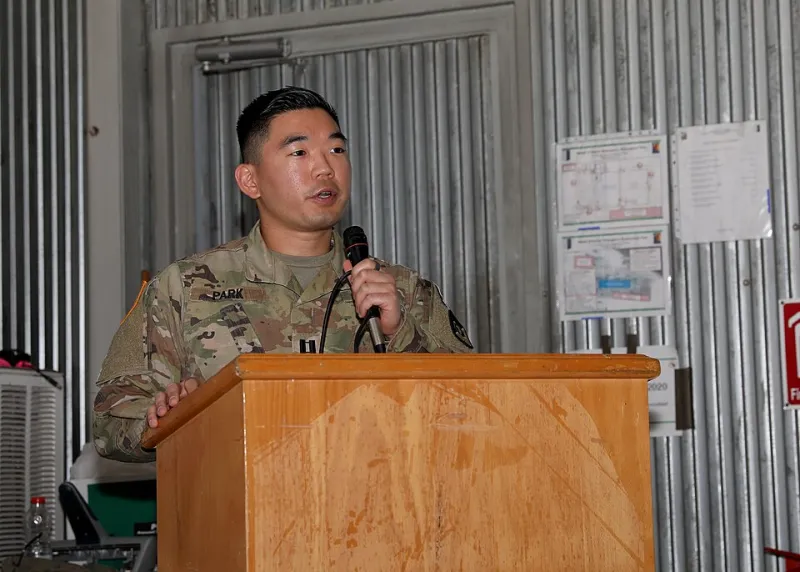
Photo: USDAgov, Public domain, via Wikimedia Commons
Growing up in Flushing, Queens, David Yoon played basketball every weekend at the local community center. He was usually one of maybe three Korean kids on the court. Most of his aunts and uncles thought it was cute — a phase he'd get out of his system before hitting the books harder in high school. He's now 28, coaching a youth basketball program in Los Angeles that serves over 200 kids from Korean, Vietnamese, Filipino, and Chinese American families. The phase, it turns out, never ended.
"Nobody told me sports could be mine," Yoon says. "Not because anyone was mean about it. It just wasn't in the picture. You played piano. You studied. Sports were for other people."
That quiet, unspoken assumption — that athletics belong to someone else's culture — is something a lot of Korean and Asian American athletes know deeply. And right now, a growing wave of players, coaches, and community organizers are actively dismantling it.
The Stereotype Nobody Talks About Out Loud
Let's be real: the "model minority" myth does a number on Asian American kids in sports the same way it does in every other area of life. The idea that Asian Americans are academically gifted but physically unassuming isn't just offensive — it actively steers kids away from athletic pursuits before they even lace up their first pair of cleats.
Sports psychologist and Korean American researcher Dr. Soojin Park, who studies identity and participation in youth athletics, puts it bluntly: "When a kid doesn't see themselves reflected in the athletes they admire, they self-select out. It's not a talent gap. It's a representation gap."
That gap is real in professional leagues, in college recruiting, in media coverage. But it's starting to close — and the people closing it aren't waiting for permission.
Playing Through It
Take the story of Christina Lim, a 26-year-old Korean American soccer player from the Bay Area who walked onto her Division I college team after being told by a club coach at 14 that she "didn't have the build" for competitive soccer. She went on to play four seasons, earn a starting spot junior year, and now runs weekend soccer clinics specifically for Asian American girls in the South Bay.
"I think about that comment a lot," she says. "Not because it still hurts, but because I wonder how many girls heard something like that and just stopped."
Her clinics are deliberately community-centered. Parents are invited. Korean, Mandarin, and Vietnamese are spoken alongside English. The goal isn't just to teach the sport — it's to make the space feel like it belongs to these families too.
That sense of belonging is something diaspora communities have had to construct themselves, often without institutional support.
Grassroots Is Where It's Growing
Across the country, Korean and Asian American-led sports organizations are filling the gaps that mainstream athletic culture leaves behind. In Chicago, the Korean American Soccer League has been running for over two decades, drawing players from their 20s through their 50s. In Atlanta, a Koreatown recreational volleyball league started during the pandemic has since expanded into a multi-sport community hub. In Houston, a group of second-gen Korean and Vietnamese American women launched a running club that's less about race times and more about mental health, community, and showing up for each other.
These aren't just hobby groups. They're infrastructure. They create visibility, mentorship pipelines, and a sense of cultural permission that says: yes, this is for you too.
The Pro Lens
On the professional side, representation is still sparse but growing in visibility. Every time a Korean or Asian American athlete breaks into a major league — whether it's the NBA, NFL, WNBA, or MLS — it lands differently in diaspora households. It's not just a sports story. It's a signal.
When Cathy Tamai, a second-generation Korean American, became an executive with the Los Angeles Rams, Korean American sports fans didn't just cheer — they shared it in family group chats. Because seeing someone who looks like you, with a name like yours, in a space that never seemed to make room for you? That's not a small thing.
"Representation isn't just about inspiration," Dr. Park notes. "It's about permission. Kids need to see the door is actually open."
Building the Next Generation
What's most exciting isn't just who's competing today — it's who's being raised to compete tomorrow. Coaches like David Yoon, organizers like Christina Lim, and the hundreds of parents quietly driving their kids to practices that their own parents never drove them to — they're building something cumulative.
The Korean and Asian American sports community in the US isn't asking for a seat at the table anymore. In a lot of cities, they're building their own tables, running their own leagues, and making sure the next generation of kids grows up knowing that the court, the field, and the track were always theirs to claim.
And honestly? That's the kind of home court advantage that lasts.