Kimchi in the Instant Pot: How Korean American Families Are Writing New Food Stories Across Generations
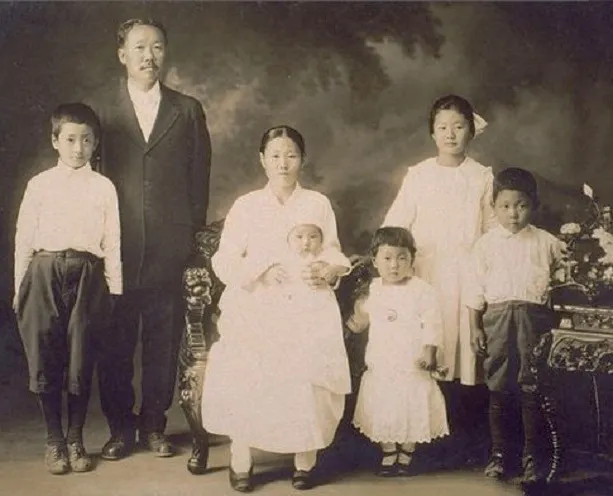
Photo: Unknown authorUnknown author, Public domain, via Wikimedia Commons
There's a particular kind of kitchen anxiety that a lot of Korean Americans know well. You're trying to recreate your halmoni's doenjang jjigae, and you can't quite get the fermented paste to taste right. You call your mom. She says, "Just add more until it smells right." You're standing in a Chicago apartment with a jar of store-bought paste and absolutely no idea what right smells like.
That tension — between inherited knowledge and practical reality — sits at the heart of how Korean American families are cooking right now. And honestly? It's producing something pretty beautiful.
The Recipe That Lives in the Body
For first-generation Korean Americans, cooking was never really about following a written recipe. Knowledge passed through hands, through smell, through watching someone do it a hundred times before you tried it yourself. Janet Yoon, a home cook in the Atlanta metro area who immigrated from Busan in the early 1990s, puts it plainly: "My mother never wrote anything down. She would have thought that was strange. You just know because you've seen it your whole life."
But when you raise kids in suburban Georgia, that transmission gets complicated fast. Janet's daughter, now in her late twenties, grew up eating her mom's cooking but spent most of her childhood eating school lunches and weekend pizza. The embodied knowledge didn't transfer the same way — and now she's actively trying to recover it.
This pattern plays out in Korean American households across the country. The second generation often grows up with access to the food but not the making of it. By the time they're adults and curious, the primary source — grandma, great-aunt, the family elder who just knew — may no longer be around. What's left is memory, Google, and a lot of trial and error.
Substitution as Survival
Here's the thing nobody talks about enough: Korean American cooking has always involved substitution. When Korean immigrants arrived in cities like Los Angeles, New York, and Chicago in the 1970s and '80s, Korean grocery stores were sparse. You worked with what you could find. Napa cabbage got swapped for Korean varieties. Gochugaru was rationed. Soy sauce brands changed depending on what the local Asian market carried that week.
In other words, adaptation isn't a betrayal of tradition — it is the tradition.
Mia Cho, who runs a small meal prep business in the Bay Area focused on Korean-inspired dishes, sees this clearly in her customer base. "My clients are mostly second and third-gen Korean Americans, but I also get a lot of non-Korean people who got introduced to Korean food through restaurants or K-dramas," she says. "They all want something that feels authentic, but they also want it to fit their lives. Someone's vegan. Someone's gluten-free. Someone doesn't have six hours to make galbi marinade."
Mia's approach is to honor the flavor profile and intention of a dish while making it accessible. Her gochujang-glazed tofu has become a cult favorite. Is it traditional? Not exactly. Does it carry the spirit of the original? She thinks so.
The Third Generation's Hunger
Something interesting is happening with third-generation Korean Americans — the grandchildren of the original immigrants. Many of them grew up with even less direct connection to Korean food culture than their parents did. But a significant number are swinging back hard, driven by a combination of cultural curiosity, social media, and a broader moment of Asian American identity reclamation.
TikTok and YouTube have become unlikely vessels for Korean culinary education. Young Korean Americans are watching Korean-language cooking channels with subtitles, participating in online communities where people troubleshoot fermentation problems and debate the correct ratio of fish sauce in kimchi. They're visiting Korean grocery stores like H Mart with the enthusiasm of anthropologists.
David Kim, who teaches a community cooking class at a Korean cultural center in the Pacific Northwest, has noticed the shift. "Five years ago, my classes were mostly older Korean immigrants and a few non-Korean food enthusiasts. Now I get a lot of younger Korean Americans who are, like, hungry — literally and figuratively. They want to connect to something they feel like they missed."
His classes have had to evolve. He now spends as much time on cultural context — why certain dishes are made for certain occasions, what ingredients mean symbolically — as he does on technique. "The food is a door," he says. "Once people walk through it, they want to know what's on the other side."
When Fusion Stops Being a Dirty Word
For a long time, "fusion" carried a slightly embarrassing connotation in Korean food circles. It suggested something watered-down, commercialized, made for a non-Korean audience. The Kogi truck era brought Korean-Mexican fusion to mainstream attention and complicated that narrative — but also reinforced the idea that fusion was primarily about appealing to outsiders.
What's happening now feels different. Korean American cooks are creating hybrid dishes not to market to a broader audience but to feed their own communities, their own families, their own complicated selves. Korean American BBQ tacos at a church potluck. Kimchi fried rice made with jasmine rice because that's what was in the pantry. Japchae served at Thanksgiving alongside the sweet potatoes.
These aren't compromises. They're expressions of a genuinely hybrid identity.
Janet's daughter — the one trying to recreate her mom's doenjang jjigae — has started hosting monthly Korean cooking nights with her friend group, most of whom are also second and third-gen Asian Americans. "None of us are trying to be purists," she says. "We're just trying to make food that tastes like home, even if home is kind of a made-up place."
Keeping the Thread Alive
Cultural preservation doesn't have to mean freezing something in amber. Korean American families are figuring out that you can honor a culinary tradition while also letting it breathe, grow, and reflect the actual lives being lived.
That might mean recording your grandmother's recipes before it's too late. It might mean teaching your kids how to make kimchi even if they groan about the smell. It might mean buying from Korean American food entrepreneurs who are doing the creative work of translating culture across generations.
The Korean American kitchen is messy, imperfect, and alive. And that's exactly what it should be.