Roots in Unexpected Places: The Asian Americans Quietly Transforming Small-Town America
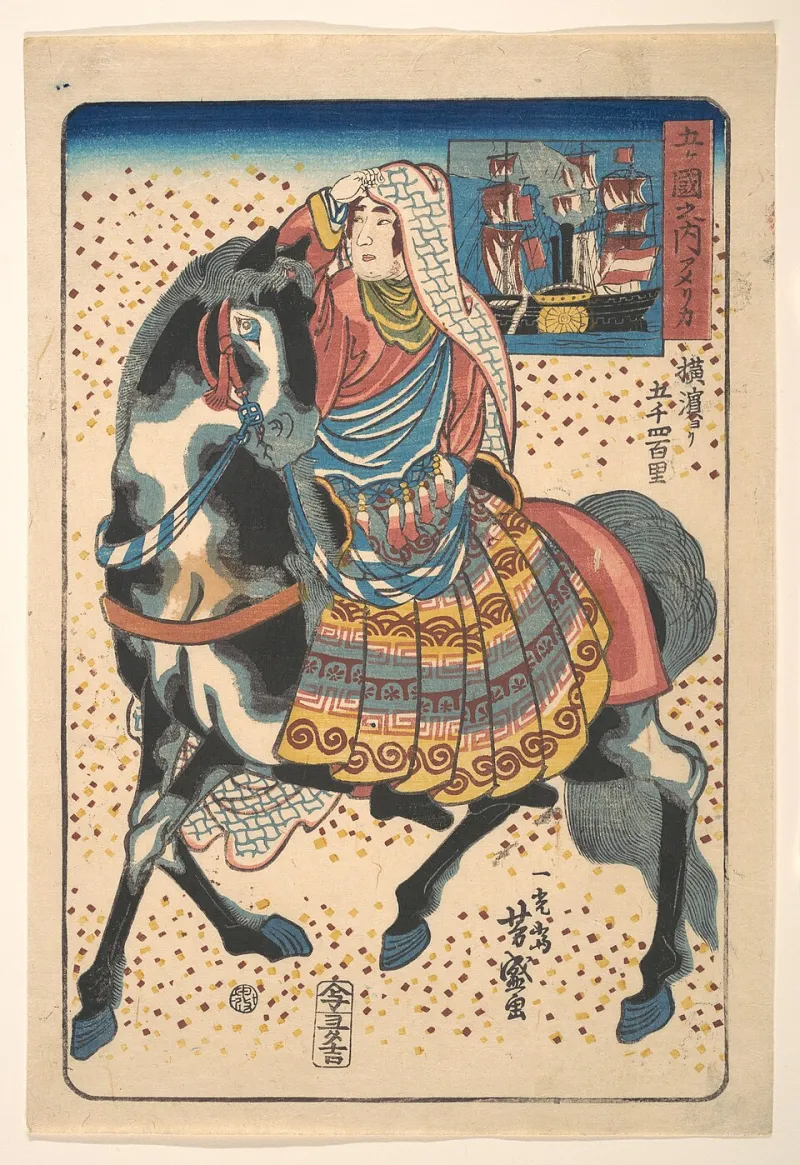
Photo: Utagawa Yoshimori, CC0, via Wikimedia Commons
For a long time, the story of Asian American life in the U.S. had a pretty predictable geography. You landed — or your parents landed — in a major metro. New York. Los Angeles. Houston. The Bay. You found your people in Koreatown or Flushing or Little Saigon, built your life inside a community that at least partially reflected your own, and you stayed.
But something's shifting. Quietly, and with growing momentum, a new wave of Korean and Asian Americans is moving somewhere else entirely — not to the next big city, but to smaller towns, rural counties, and mid-sized communities that most people wouldn't associate with Asian diaspora life at all. And they're not just surviving out there. They're building.
So Why Leave?
The reasons are layered, and they're rarely just one thing. Affordability is obviously part of it — housing costs in major metros have become genuinely brutal, and the math of raising a family or starting a business in a city like San Francisco or Seattle has stopped making sense for a lot of people. But dismissing this as a purely economic trend misses something real.
For many, the pull toward smaller towns is also about family. Second and third-generation Asian Americans who grew up watching their parents sacrifice proximity to extended family for career opportunity are making a different calculation. They want their kids to grow up near grandparents. They want slower rhythms. They want, in some cases, to reconnect with places that shaped them — even if those places were never exactly designed with them in mind.
Jenny Park, who moved from Chicago to a small town in western North Carolina with her husband and two kids, puts it plainly: "We weren't going back to a Korean neighborhood. There isn't one. But we were going toward something — toward land, toward community, toward a pace of life that felt sustainable. We just had to build the Korean part ourselves."
The Challenges Are Real
Let's not romanticize this. Moving to a small town as an Asian American, particularly in regions with little existing diaspora infrastructure, comes with friction that people in diverse metros don't always have to think about.
Microaggressions are part of daily life in ways that can feel exhausting and isolating. "Where are you really from?" never goes away. Finding specific ingredients — the right gochugaru, decent doenjang, fresh perilla — can require a two-hour round trip or a well-timed Amazon order. There are no Korean churches, no weekend Korean language schools, no community centers that know your holidays.
For parents especially, the question of cultural transmission becomes urgent. How do you raise kids who feel connected to their Korean or Filipino or Vietnamese identity when the nearest cultural touchpoint is a YouTube video?
And then there's the more complicated social reality: small towns are not monoliths. Some are genuinely welcoming, curious, open. Others carry histories of exclusion that run deep, and Asian Americans navigating those spaces have to do a kind of constant, low-grade emotional labor that their white neighbors simply don't.
Building What Doesn't Exist Yet
Here's what's remarkable, though: instead of waiting for infrastructure to appear, a lot of these folks are just creating it.
In rural Tennessee, a Korean American couple turned their farmhouse into a recurring supper club, inviting neighbors to eat kimchi jjigae and japchae and talk about where the food comes from. What started as a casual gathering has become a monthly event with a waitlist.
In a mid-sized Ohio city, a group of Asian American transplants started a private Facebook group that quickly became a real-world network — sharing restaurant finds, organizing Lunar New Year celebrations, and pooling resources to bring in Korean language tutors for their kids via Zoom.
In New Mexico, a second-generation Filipino American woman opened a small grocery that stocks both local green chile staples and hard-to-find Southeast Asian pantry items. She describes it as "a meeting place" as much as a store.
These aren't grand cultural institutions. They're scrappy, human-scale, often run on volunteer energy and group chats. But they're doing something important: they're making Asian American life visible in places where it was previously invisible, and they're doing it on their own terms.
What This Means for the Diaspora Story
There's something worth sitting with here. The dominant narrative of Asian American community has always been tied to density — to the idea that cultural life requires a critical mass of people, a Koreatown, a Chinatown, a neighborhood with the right restaurants and the right churches and the right grocery stores.
What's happening in small towns is a challenge to that assumption. It suggests that community is something you make, not just something you find. That cultural identity can travel and adapt and take root in soil that wasn't prepared for it.
It also raises harder questions. Is it sustainable? Can you really raise culturally grounded kids in a place with no diaspora community beyond the one you personally assembled? What gets lost in translation when you're the only Korean family in a county of 30,000 people?
Those questions don't have clean answers. But the people asking them — the ones who've chosen this path, eyes open — seem less interested in the theoretical debate than in the practical work of making something real.
Jenny Park, back in North Carolina, has a Korean American potluck happening at her place next month. She found the other attendees through Instagram, a regional diaspora Facebook group, and one very fortuitous conversation at a farmers market.
"It's not Koreatown," she says, laughing. "But it's ours."
And maybe that's enough to start with.