Staying Put: Why a New Generation of Korean Americans Is Planting Roots Right Back Where They Started
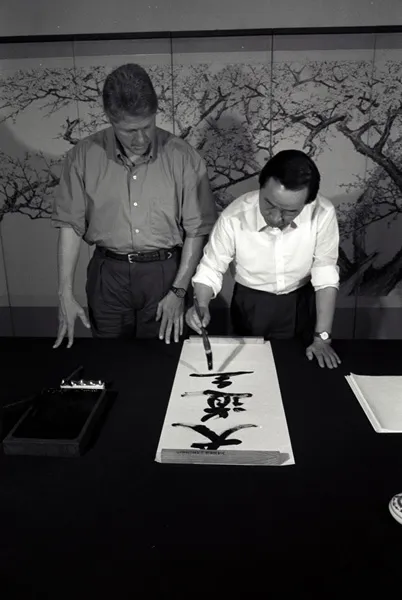
Photo: President (1993-2001 : Clinton). White House Photograph Office. 1/20/1993-1/20/2001, Public domain, via Wikimedia Commons
For a long time, the story went something like this: your parents immigrate, grind it out in a tight-knit ethnic neighborhood, and sacrifice everything so you can leave. Move to the suburbs. Get the house with the yard. Assimilate. Level up. That was the script.
But lately, a lot of young Korean Americans are crumpling up that script and tossing it.
From Koreatown in Los Angeles to Flushing in Queens to the Assi Plaza corridor in Atlanta's Gwinnett County, something is shifting. Young Korean Americans—many of them college-educated, many of them with options—are choosing to move back into or near the same ethnic enclaves their parents spent decades trying to graduate from. And the reasons are more complicated, more interesting, and honestly more hopeful than a simple case of homesickness.
The Economics Are Doing a Lot of the Talking
Let's be real: the housing market is brutal right now. The dream of a detached single-family home in a quiet suburb is increasingly out of reach for younger millennials and Gen Z buyers, no matter their background. But for Korean Americans specifically, moving back to the enclave often comes with a practical upside that goes beyond just cheaper rent.
"My parents own a small building in K-Town," says 29-year-old graphic designer Jisoo Park, who moved back to the Los Angeles Koreatown neighborhood two years ago after spending her mid-twenties in Silver Lake. "It made financial sense to come back, but honestly? I thought I'd feel like I was going backward. Instead, I feel more grounded than I ever did trying to fit into spaces that weren't really built for me."
That sentiment—feeling more grounded—keeps coming up. And it points to something deeper than just economics.
Community as a Feature, Not a Bug
For a lot of second-generation Korean Americans, growing up in an ethnic enclave came with complicated feelings. The hyper-visibility. The pressure. The sense of being caught between two worlds. Many of them couldn't wait to get out and just be "American," whatever that meant.
But somewhere in their late twenties and early thirties, the calculus starts to change.
"I spent years trying to code-switch my way through corporate environments," says Daniel Cho, 32, who recently opened a Korean-fusion sandwich shop in Flushing after working in finance in Midtown Manhattan for nearly a decade. "And I was good at it. But I got tired. Coming back here, I don't have to explain myself as much. The community already knows the context."
Daniel's shop, which opened earlier this year, pulls in a mix of longtime neighborhood regulars and younger Korean Americans who've made similar moves back. He says the energy is different from what he expected.
"It's not like we're all trying to recreate the 1990s version of this neighborhood. We're building something new inside of something that already exists. That's actually kind of exciting."
What This Means for the Neighborhoods Themselves
Urban planners and community advocates are paying attention to this trend, and not without some caution.
The influx of younger, higher-earning Korean Americans into historically working-class ethnic enclaves raises real questions about gentrification—even when it's happening within the same cultural community. Property values in parts of Koreatown have climbed significantly in recent years, and longtime residents, including many older Korean immigrants and non-Korean neighbors, are feeling the squeeze.
"There's a version of this that's beautiful—second-generation folks investing in the community their parents built," says urban planner and community advocate Grace Yoon, who works with a nonprofit focused on affordable housing in Los Angeles. "And there's a version that's just displacing the most vulnerable people in that same community. We have to be honest about both."
Grace points out that intentionality matters. Young Korean Americans moving back who actively support local small businesses, advocate for tenant protections, and engage with community organizations are contributing something genuinely valuable. Those who are simply chasing a trendy neighborhood aesthetic without that engagement? That's a different story.
A Different Kind of Identity Negotiation
Beyond economics and neighborhood politics, there's a quieter identity shift happening among the young people making this choice.
Many of them describe a kind of reconciliation—with their parents, with their heritage, and with the parts of themselves they spent years trying to minimize. Living in proximity to the enclave, they find themselves more curious about Korean history, more engaged with Korean American cultural organizations, and more connected to a sense of collective identity that felt suffocating when they were younger but feels like a resource now.
"I think I had to leave to appreciate what was here," says Mina Seo, 27, who moved back to her parents' neighborhood in Annandale, Virginia—known locally as "Koreatown" for the DC metro area—after finishing her master's degree. "Now I actually go to the community events. I actually show up. I couldn't do that when I was a teenager because I was too busy being embarrassed."
Mina recently started volunteering with a local Korean American cultural center, helping younger kids navigate the same dual-identity questions she wrestled with growing up.
What It All Adds Up To
The "great return" isn't a monolith. It looks different in every city, every family, every block. Some young Korean Americans are coming back by choice; others are coming back by necessity and finding unexpected gifts in the return. Some are transforming the neighborhoods they move into; others are being transformed by them.
But taken together, this trend is quietly challenging one of the oldest assumptions in the immigrant success narrative—that moving away is always moving forward. For a growing number of young Korean Americans, moving back is its own kind of progress.
And the neighborhoods they're returning to? They're already changing in response.