Ditching the Script: Korean American Professionals Who Chose Their Own Career Story

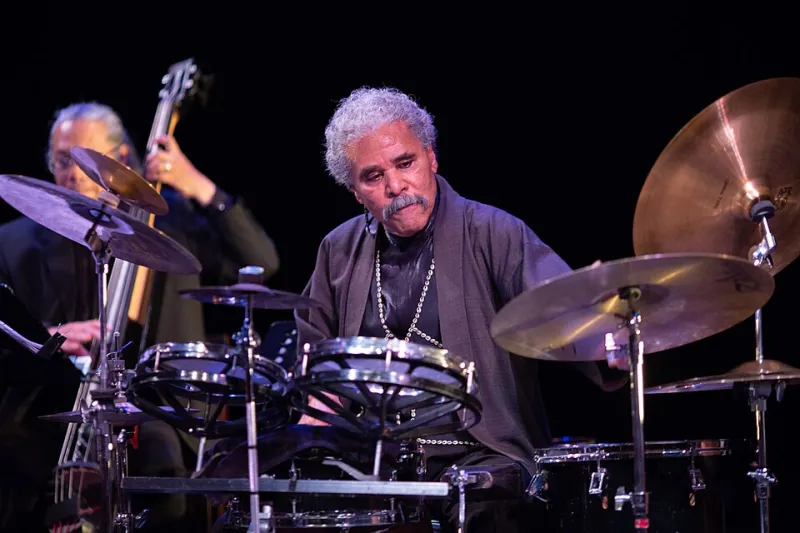
Photo: U.S. Army photo by Sgt. 1st Class Warren Wright, Public domain, via Wikimedia Commons
Grow up Korean American in this country and you probably know The List. Medicine. Law. Engineering. Finance, if your parents were feeling flexible. These weren't just suggestions — they were the architecture of what success was supposed to look like, built from sacrifice and immigrant ambition and the very reasonable desire to never be financially precarious again.
For a lot of families, The List was an act of love. It still is.
But something is happening in 2024. More and more Korean and Asian American young professionals are stepping off that well-worn path and building something that looks completely different — creative careers, entrepreneurial ventures, community-rooted work that doesn't fit neatly on a résumé your halmeoni could brag about at church.
And they're doing it without abandoning the values that List was built on. That's the part worth paying attention to.
The Conversation That Changes Everything
For David Lim, 31, the pivot started with a panic attack in a hospital break room during his second year of medical school.
"I was objectively doing what I was supposed to be doing," he said. "Good school, good grades, on track. And I was completely miserable in a way I couldn't explain to anyone."
He eventually left the program — a decision that took months of therapy, a lot of sleepless nights, and one extremely difficult phone call to his parents in suburban New Jersey. Today he runs a design studio in Brooklyn that focuses on branding for Asian American-owned small businesses. He also teaches a workshop series on creative entrepreneurship at a Korean American community center in Flushing.
"My dad didn't speak to me for three months," David said, without bitterness. "Now he tells people his son is a designer who works with his community. He found his own way to be proud of it."
That arc — painful rupture, gradual understanding, unexpected pride — shows up again and again in conversations with Korean American professionals who chose unconventional routes.
What 'Success' Actually Costs
The pressure to pursue high-status, high-income careers doesn't come from nowhere. First-generation Korean immigrants built lives in America under real economic precarity, often in industries that required them to be self-sufficient because corporate doors weren't always open. The drive to push their kids toward stable, prestigious professions was — and is — deeply rational.
But the model minority framework that props up those expectations also flattens the actual diversity of experience within Korean and Asian American communities. Not everyone has the same access to the educational pipeline. Not everyone thrives in the same environments. And increasingly, younger generations are asking whether a career that looks impressive from the outside is worth it if it hollows you out from the inside.
Eunice Han, a 28-year-old musician and music educator based in Chicago, put it plainly: "My parents immigrated so I could have choices. Somewhere along the way, 'choices' got narrowed down to three options. That didn't feel like the point."
Eunice studied accounting at her parents' request, worked two years at a firm, and then — with her savings and a lot of nerve — quit to pursue a full-time career in music education, eventually building a program that brings Korean and Korean American musical traditions into Chicago public schools.
"The accounting degree wasn't wasted," she laughed. "I run my own business. I do my own taxes. My mom has actually come around on this."
The New Toolkit
What makes this moment different from previous generations of creative risk-takers is the infrastructure that now exists to support non-traditional paths.
Social media has made it possible to build audiences and client bases without traditional gatekeepers. Platforms like Substack, TikTok, and Instagram have turned niche expertise into viable careers. The pandemic-era normalization of remote work cracked open geographic constraints that used to limit where you could build certain kinds of careers.
And within Korean and Asian American communities specifically, there's a growing ecosystem of mentorship, networking, and mutual support for people doing unconventional things. Organizations, online communities, and informal networks are connecting Korean American entrepreneurs, artists, and community workers in ways that make the leap feel less lonely.
David Lim's studio, for example, grew almost entirely through word-of-mouth within Asian American small business networks. "The community fed the work," he said. "I didn't have to go outside it to build something real."
Holding Onto What Matters
Here's what's striking about the Korean Americans building non-traditional careers right now: most of them aren't rejecting their cultural values. They're reinterpreting them.
The work ethic is still there — often ferociously so. The commitment to family, to community, to building something lasting — that's still there too. What's shifted is the form those values take.
Eunice talks about her music education program as a form of preservation, a way of honoring Korean cultural heritage while also creating economic opportunity for herself and the artists she works with. David talks about his design work as community service — using his skills to help Korean American business owners compete in a market that doesn't always see them.
"I think my parents wanted me to be successful and to contribute something," David said. "I'm doing both. It just doesn't look like what they imagined."
Advice for Anyone Navigating This
If you're somewhere in the middle of this — thinking about a pivot, dreading the family conversation, or already a few years into a path that raised some eyebrows — here's what the people we spoke with wanted to pass along:
Have the conversation early, and have it more than once. Your parents' first reaction is rarely their final one. Give it time.
Find your people. The Korean and Asian American professional community for non-traditional careers is real and growing. Seek it out — online, at events, through organizations doing this work.
Don't perform the pivot. You don't have to make your unconventional career into a statement against your family's values. You can just... do the work and let it speak.
Know your numbers. Whether it's freelance rates, business finances, or savings runway, the practical stuff matters. Eunice's accounting background wasn't a detour — it was infrastructure.
The script that defined Korean American success for the last few decades isn't going anywhere overnight. But it's getting longer. There's more room in it now than there used to be — and the people writing those new pages are doing something genuinely worth watching.