When You're the Bridge: The Invisible Weight of Growing Up as Your Family's Translator
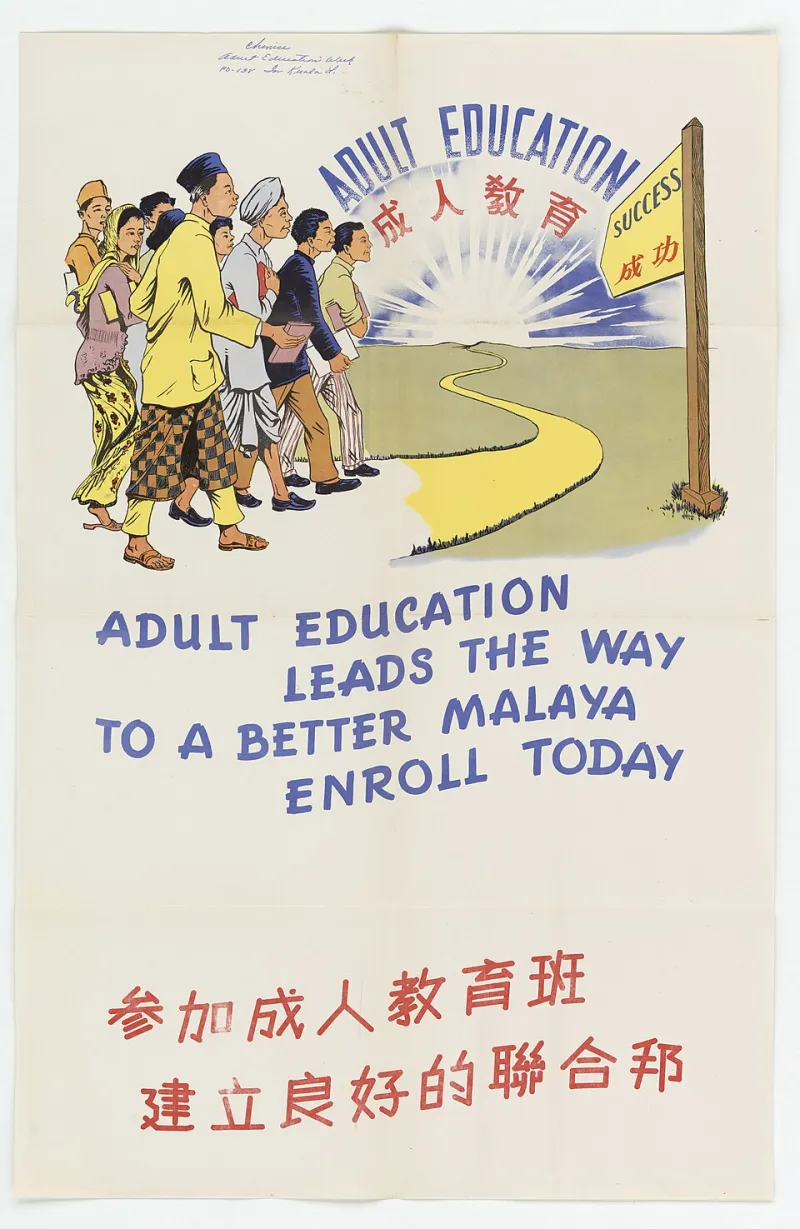
Photo: Unknown authorUnknown author or not provided, Public domain, via Wikimedia Commons
There's a scene that lives rent-free in the memory of so many Korean and Asian American adults. You're maybe ten, maybe twelve, sitting in a fluorescent-lit waiting room—a doctor's office, a bank, a government building—and your parent hands you a form, a phone, a problem. And without anyone asking if you're ready, you become the adult in the room.
You translate. You explain. You advocate. You absorb whatever the other person is saying, filter it, soften it if it's bad news, and deliver it to the person who trusts you most in the world. Then you go home and do your homework.
For millions of children of Korean and Asian immigrants in the United States, this was just Tuesday.
More Than a Vocabulary Lesson
The clinical term is "language brokering," but that phrase doesn't really capture what's actually happening. It sounds almost administrative. Neutral. Clean.
The reality is anything but.
"I translated for my mom at her cancer screening when I was thirteen," says Hyunjin Lee, now 34 and a social worker based in Chicago. "I didn't fully understand what the doctor was saying. I was trying to translate medical terminology I'd never heard before, while also managing my own fear, while also trying to keep my mom calm. Nobody had prepared me for that."
Hyunjin's story is not unusual. Research on language brokering in immigrant families consistently shows that children—particularly eldest children and daughters—carry a disproportionate share of this responsibility. And while some studies highlight cognitive and linguistic benefits, the emotional dimension of the work is far less studied and far less discussed.
"We talk about the skill-building," says Dr. Soo-Ah Kwon, a researcher who studies Asian American family dynamics at a Midwest university. "But we don't talk enough about what it means to be a child who is regularly exposed to adult-level stress, adult-level stakes, and adult-level consequences. That has a cost."
The Specific Weight of Korean American Family Culture
For Korean American kids specifically, language brokering happens inside a cultural context that makes it even more layered. Korean family dynamics often involve strong hierarchies, deep expectations around filial piety, and an unspoken rule that family struggles stay within the family. Asking for outside help can feel like a failure. Which means the child translator isn't just a linguistic resource—they're often the only resource.
"There was never a question of whether I would help," says Kevin Rhee, 29, a teacher in the San Gabriel Valley area of Los Angeles. "It was just assumed. And I didn't resent it at the time because I loved my parents and I wanted to protect them. But I also grew up really fast in ways that I'm still unpacking."
Kevin describes a particular kind of loneliness that comes with the role—the sense of being necessary but also invisible. His parents leaned on him completely in those moments, but the emotional processing happened alone, if at all.
"After a hard interpreter situation, I'd just go back to being a kid. Nobody checked in. Nobody said, 'Hey, that was a lot.' You just moved on."
The Gifts Nobody Talks About Either
Here's the thing, though: it's not all damage and deferred grief. A lot of people who grew up as family interpreters describe real, lasting gifts that came out of the experience—and they don't want those erased from the story either.
"I can read a room like nobody's business," says Minyoung Choi, 31, a nonprofit communications director in New York City. "I learned early how to listen to what people aren't saying, how to find the right words for a situation, how to hold space for someone who's scared. Those skills are at the core of everything I do professionally."
Minyoung also talks about a closeness with her mother that she believes was forged in part through those translation moments. "There's something about being the person your parent trusts with their most vulnerable situations. It created a bond that I don't think we would have had otherwise."
Empathy. Code-switching fluency. Advocacy instincts. An almost intuitive ability to navigate systems and bureaucracies. These are common threads in the stories of adult children who served as family interpreters—skills that often show up in careers in healthcare, law, social work, education, and the arts.
What Happens When We Name It
One of the most consistent things people say when they first encounter the language of "language brokering" or "emotional labor" applied to their childhood experience is: I didn't know there was a word for it.
And that naming matters.
"I was in a therapy session in my late twenties and my therapist asked me about my childhood, and I started describing all of this," says Hyunjin. "And she said, 'That's a significant amount of responsibility for a child.' And I just started crying. Because nobody had ever said that out loud before. I had always framed it as just... what we did."
This is where community—real community, the kind that Kuasewon is built around—has a role to play. When Korean and Asian American spaces create room for these conversations, something shifts. People stop carrying the weight alone. They find language for experiences that went unnamed for decades. They connect with others who understand without needing an explanation.
Several Asian American mental health organizations have started offering support groups specifically for adult children of immigrants, and the response has been significant. The appetite for this kind of communal processing is real and growing.
The Conversation Keeps Going
For many children of Korean and Asian immigrants, the interpreting never fully stops. It just evolves. The medical forms and utility bills of childhood become the Medicare paperwork and lease agreements of adulthood. The emotional labor shifts shape but rarely disappears.
What changes, ideally, is the relationship to it. The ability to set limits. The capacity to ask for support. The recognition that being a bridge between worlds is genuinely hard work—and that it shaped you into someone remarkable, even when it cost something real.
"I'm proud of who I am partly because of all of that," says Kevin. "But I also wish someone had told me it was okay to put the weight down sometimes. That it wasn't all on me."
Maybe that's the conversation we start having now.