Building From Scratch: Why Second-Gen Asian Americans Are Done Waiting for a Seat at the Table
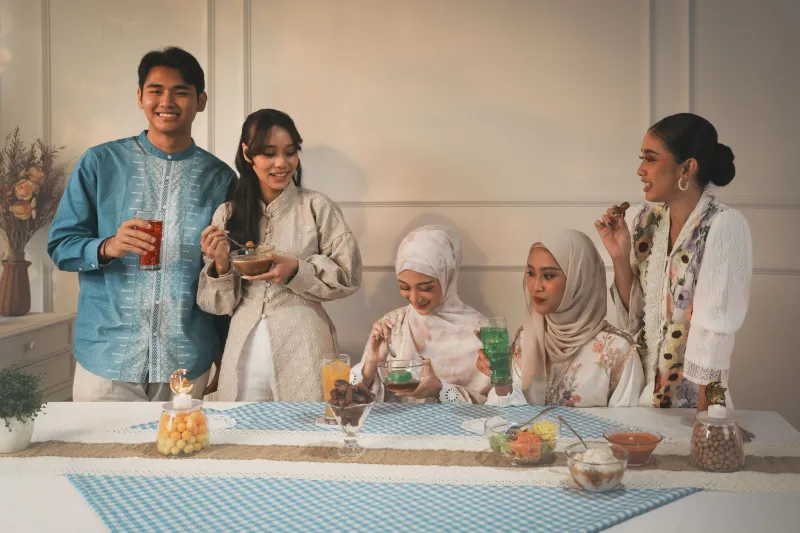
There's a group chat somewhere in Chicago with 200-plus members. It started as a way to coordinate Korean barbecue runs between college friends who'd graduated and scattered across the city. Two years later, it has a Notion board, a monthly potluck rotation, a shared Spotify playlist that somehow everyone contributes to, and an unspoken rule: no networking energy allowed.
"We were so tired of spaces that felt transactional," says Mina, one of the original organizers, who asked to use only her first name. "Every Asian American event we went to felt like a LinkedIn mixer with better food. We wanted something that actually felt like home."
What Mina and her crew built isn't unique — it's part of a quiet but unmistakable pattern unfolding across American cities. Young second-generation Asian Americans, many of them children of Korean, Filipino, Vietnamese, and South Asian immigrants, are constructing their own social infrastructure from the ground up. Not because the old institutions are gone, but because they often feel like they were built for someone else.
The Gap That Existing Spaces Leave Behind
Let's be honest: traditional Korean American institutions — churches, alumni associations, cultural organizations — did enormous work for the first generation. They provided language support, job connections, a sense of familiarity in an unfamiliar country. For a lot of immigrant families, those spaces were lifelines.
But for their kids? It's complicated.
"The Korean church my parents dragged me to growing up was genuinely their whole world," says James, a 28-year-old graphic designer in Los Angeles. "For me, it felt like I was always performing a version of myself that didn't quite exist. Too American for the aunties, too Korean for my coworkers. Neither space was really mine."
That in-between feeling is something a lot of second-gen Asian Americans know well. And it's exactly the discomfort that's been quietly fueling a new kind of institution-building — one that doesn't require you to choose a lane.
Across the country, these alternative structures are popping up in different forms: intimate supper clubs in Brooklyn apartments, pop-up art markets in Atlanta strip mall parking lots, private Discord communities for Asian American writers, monthly hike meetups in the Pacific Northwest, zine collectives in the Twin Cities. They look informal from the outside. But talk to the people running them, and you realize how deliberate the design actually is.
Designing for Belonging, Not Optics
Sophia runs a dinner club in the Bay Area that she describes as "aggressively non-instagrammable on purpose." No aesthetic table settings. No content creation encouraged. Just eight to twelve people, rotating hosts, and a loose rule that whoever cooks gets to pick the theme.
"I've been to so many 'community events' that were really just content farms," she says, laughing. "The vibe was always about documenting the thing more than experiencing it. I wanted us to actually be present with each other."
That intentionality — designing for the feeling rather than the optics — keeps coming up when you talk to organizers. These spaces are being built with a kind of deliberate anti-scalability. They're meant to stay small, stay weird, stay specific.
That's a direct rejection of how a lot of mainstream community spaces operate, where growth is always the goal and metrics are how you prove your worth. For a generation raised on social media performance and résumé-building, choosing smallness is almost a radical act.
The Discord Generation Does It Different
Not everything is happening IRL, obviously. Some of the most vibrant new social structures being built by young Asian diaspora exist entirely online — and they're surprisingly intimate.
A private Discord server for second-generation Korean American creatives, which one member described to us as "basically a group therapy session that also has a sick playlist channel," has become a primary social anchor for dozens of members who've never met in person. They share job leads, yes, but also family drama, mental health check-ins, recommendations for Korean dramas that actually hold up, and voice chats that run until 2 a.m. on a Tuesday.
"It sounds parasocial from the outside but it genuinely isn't," says one member, a writer based in New York. "These are real relationships. We've shown up for each other in real ways. The platform is just Discord. The thing itself is community."
What makes these digital spaces function differently from, say, a Facebook group or a subreddit, is curation. They're invite-only, or they require an application, or they grow through personal referrals. The friction is the point. It keeps the space from becoming a broadcast channel and keeps it feeling like a neighborhood.
What These Spaces Actually Reveal
Pull back and look at this whole landscape, and a few things become clear.
First, the demand for community among young Asian diaspora is real and intense — and it's not being fully met by existing institutions. Whether that's a cultural church, a mainstream community center, or a corporate diversity initiative, something keeps getting lost in translation.
Second, this generation isn't waiting to be invited. They're building the thing they want. And they're doing it with a sophistication that often goes unrecognized because it doesn't look like institution-building from the outside. There's no 501(c)(3) filing. There's no board of directors. But there is a Notion doc, a shared Google Calendar, and a set of community agreements that everyone actually read.
Third — and maybe most importantly — these spaces are explicitly pan-Asian in a way that older institutions often weren't. Mina's Chicago dinner group has members who are Korean, Taiwanese, Thai, and half-Japanese. Sophia's Bay Area dinner club has hosted meals themed around Okinawan food, Filipino-American fusion, and Korean Chinese cuisine. The boundaries are looser, the definitions of who belongs are wider.
"My parents' generation organized around nationality, around religion, around what village you were from," says James. "We're organizing around vibe. Around shared experience. Around the fact that we all grew up explaining our lunches to white kids. That's its own kind of kinship."
The Long Game
None of this is a replacement for larger structural change — for representation, for policy, for the kind of institutional power that takes decades to build. The organizers running these spaces are clear-eyed about that.
But in the meantime, while that longer work continues, something important is happening in these small, intentional, quietly radical spaces. People are practicing what it feels like to belong somewhere that was made for them. They're learning how to show up for each other without an agenda. They're building the social muscle memory of community.
And maybe that's the real institution being built here — not a building, not an org, but a generation of people who know what good community feels like because they made it themselves.
When the table didn't have enough seats, they just built a new one. And honestly? The food's better there anyway.